Why hardworking crews still lose to large sites, and what actually changes the result
It is a familiar scene. The road is dusty again. A complaint lands on your desk. Someone says the cleaning staff are not doing their
job, and a meeting gets called.
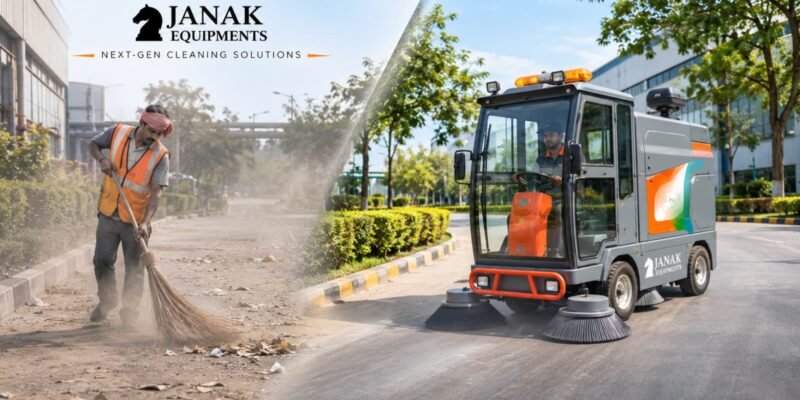
But walk the site early in the morning and you will often see something different: people working hard, with brooms, in the dust
and the heat, covering ground that is simply too big for hand tools. If that sounds like your site, here is an uncomfortable thought:
your staff may not be the problem. Your cleaning method might be.
The Blame Game Nobody Wins
When a site looks dirty, the first instinct is to look at the people. More supervision. More warnings. More staff. Sometimes that
helps for a while. But if the same complaints keep coming back, no matter how many people you add, it is worth asking a
different question: is it even possible to keep this site clean with the tools we are using?
A Simple Thought Experiment
Imagine a campus or factory with long internal roads. Now imagine a team of hard-working people with brooms, cleaning those
roads from one end to the other. By the time they reach the far end, the first stretch has already collected fresh dust, fresh leaves
and fresh litter. They are not slow. They are not lazy. They are simply chasing a target that moves as fast as they do.
(This is an illustration to explain the idea, not a measured study. Real numbers depend on your site.)
Now add a new block, a new phase or more vehicles. The area grows, but the broom is still the same broom. Doubling the area
means roughly doubling the crew, and even then you are only keeping pace, never getting ahead.
Why Hardworking Crews Still Lose
● The math is against them: Hand sweeping scales only by adding people, and area grows faster than budgets
● Brooms stir dust: Dry sweeping lifts fine dust into the air, where it settles back within hours
● Coverage has a ceiling: A person can only walk and sweep so fast, and fatigue slows the day further
● Far corners get skipped: Outer roads, parking areas and back lanes are cleaned only when time allows
● Conditions are harsh: Heat, dust and traffic wear down even the most dedicated worker
● Results vary: Quality changes with the person, the shift and the weather
None of these are failures of effort. They are limits of the method.
What Changes When You Change the Method
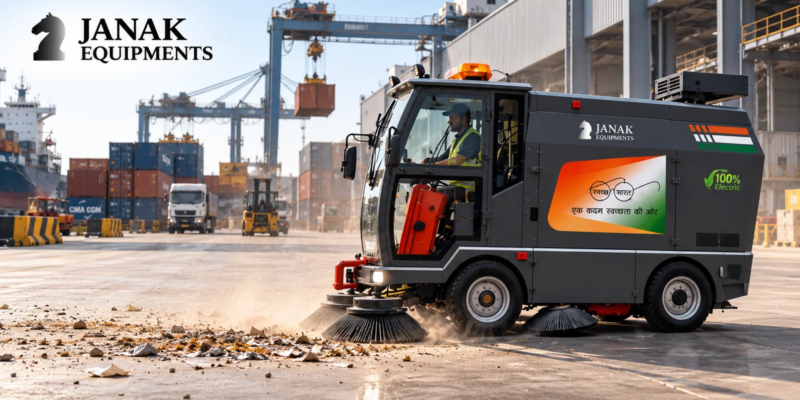
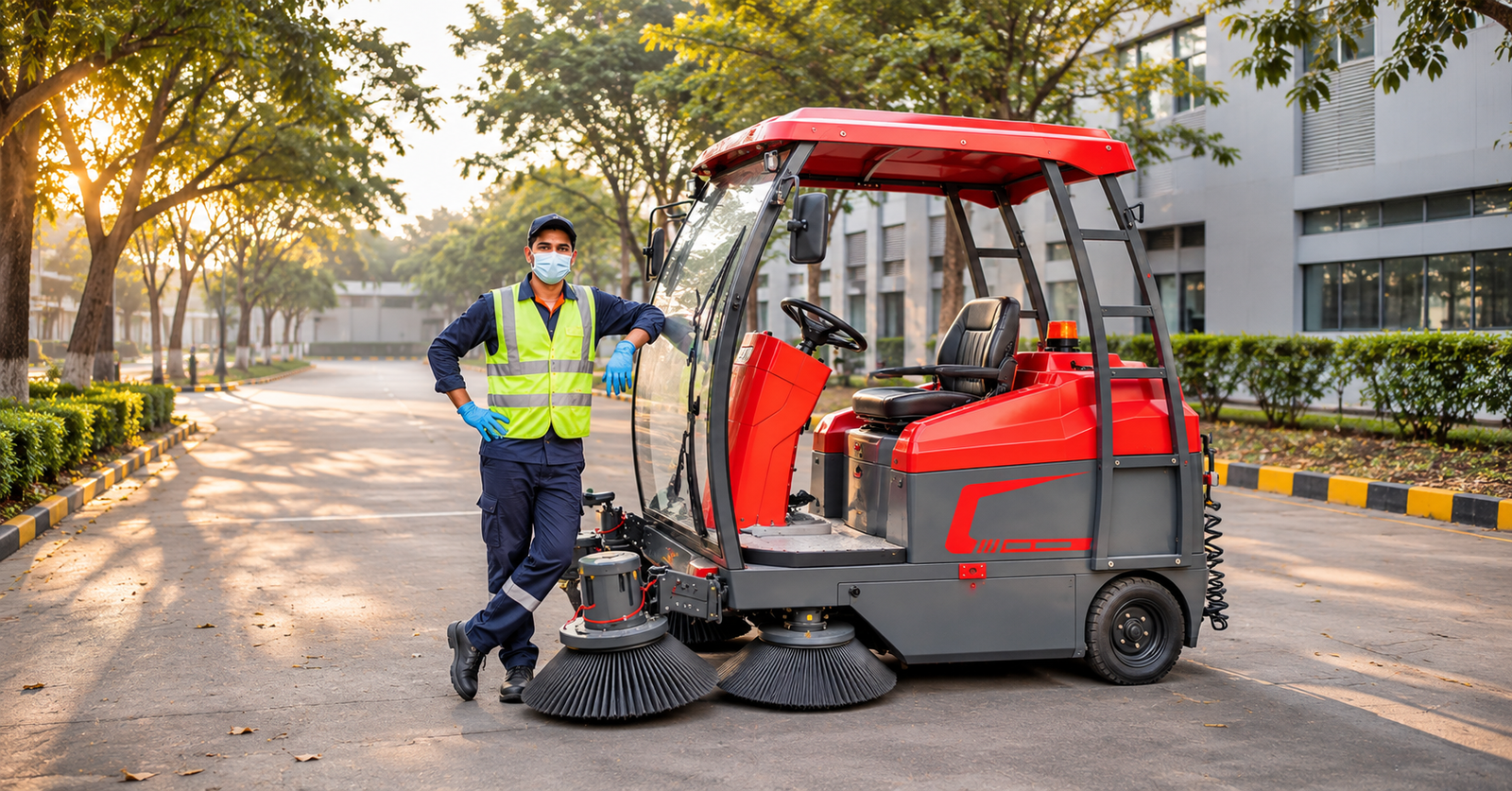
A ride-on sweeper does not replace the commitment of a good cleaning team. It changes what that team is able to achieve.
● Coverage: One operator covers ground that would take a crew far longer to clean by hand
● Dust control: Suction, filters and water spray capture dust instead of spreading it
● Consistency: The same sweep on every pass, on every shift
● Reach: Far roads and large yards get cleaned on schedule, not whenever there is time
● Predictable cost: Machine running cost is steadier than daily labor cost that keeps rising
And What Happens to Your People?
This is the part that matters most, and it is often handled badly. A good rollout does not mean cutting your team. It means giving
them better work:
● Upskilling: Interested workers can be trained as machine operators, a more skilled and better-regarded role
● Redeployment: Other staff move to detailed work that machines cannot do, such as corners, drains, washrooms and spot
cleaning
● Better conditions: An operator in a protected seat breathes far less dust than a person sweeping by hand all day
● Less strain: Less bending, less walking, less exposure to heat and traffic
When people see the machine as a tool that helps them, not a threat to them, the change goes much more smoothly.
4 Questions to Ask Before You Blame Your Team
- Talk to your team first. Explain the plan and invite their questions.
- Pick a pilot zone. Start with your longest, dustiest or most complained-about road.
- Train operators carefully. Include safe driving, hopper emptying and daily checks.
- Keep a hybrid model. Machines for coverage, people for detail.
- Measure and share the results. Show the team and management what improved.
Frequently Asked Questions
Does this mean cleaning staff are not needed?
No. Machines take over the large, repetitive coverage, while people handle detail work, corners, washrooms, drains and anything
that needs judgment. The goal is to put people where they add the most value.
Will my cleaning staff lose their jobs if I buy a sweeper?
Not necessarily. Many facilities retrain existing workers as machine operators and redeploy others to detailed cleaning. Involving
your team early makes the change smoother.
How do I know if the method is the problem?
If you keep adding staff but complaints continue, some areas are cleaned late or skipped, dust returns within hours, or your site
has grown but your cleaning plan has not, the method is likely the issue.
Is a ride-on sweeper only for very large sites?
Not only. Compact models exist for campuses, parking areas and smaller commercial sites. The right size depends on your area
and layout.
Give Your Team the Right Tools
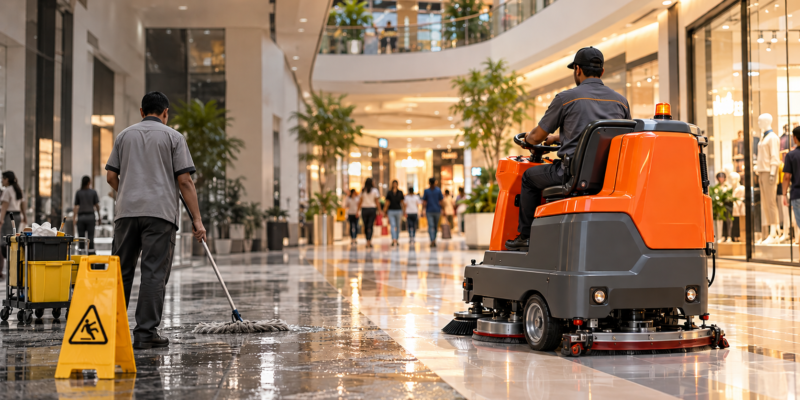
Janak Equipments builds electric ride-on sweepers and ride-on scrubber dryers with durable construction and advanced
lithium-ion battery systems, designed for Indian factories, campuses, townships, airports and municipal areas. Tell us about your
site and we will help you find a method that works with your people, not against them.
Call or WhatsApp: +91 77728 55500
Email: info@janakequipments.com
Visit us: Ground Floor, Villa 140, Omaxe City 1, Bypass, Indore, 452016
Contact Us: https://janakequipments.com/contact-us/
Our Products: https://janakequipments.com/our-products/
Janak Equipments designs and delivers next-generation cleaning machines for municipal, industrial, and commercial operations
across India.
Learn more about us: https://janakequipments.com/about-us