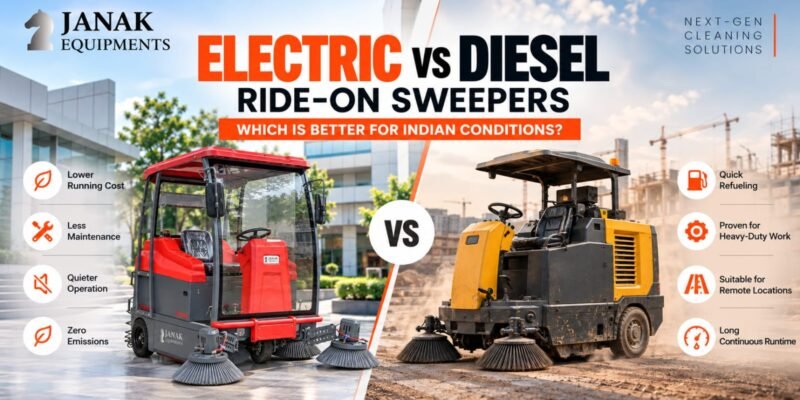
RK1100 vs RK1400 vs RK1950 vs RK2200
Buying a ride-on sweeper is easy. Buying the right one for your facility is where most people get stuck.
Go bigger than you need, and you’ve overspent on a machine that’s harder to maneuver than it needs to be, that guzzles more charge per shift than your operation requires, and that sits underutilized on smaller jobs. Go smaller, and you’ll be running extra shifts, hiring more operators, and still struggling to cover the same ground a properly sized machine could handle in a single pass.
This is the single most common — and most expensive — mistake facility managers make when procuring cleaning equipment: choosing based on price or brand reputation alone, without actually mapping the machine to the job.
This is the single most common — and most expensive — mistake facility managers make when procuring cleaning equipment: choosing based on price or brand reputation alone, without actually mapping the machine to the job.
If you’re comparing our RK series — the RK1100, RK1400, RK1950, and RK2200 — here’s a complete breakdown to help you think through the decision properly, so you land on the model that actually fits your operation instead of just the one with the biggest number on the spec sheet.
Why Getting This Decision Right Matters More Than You Think
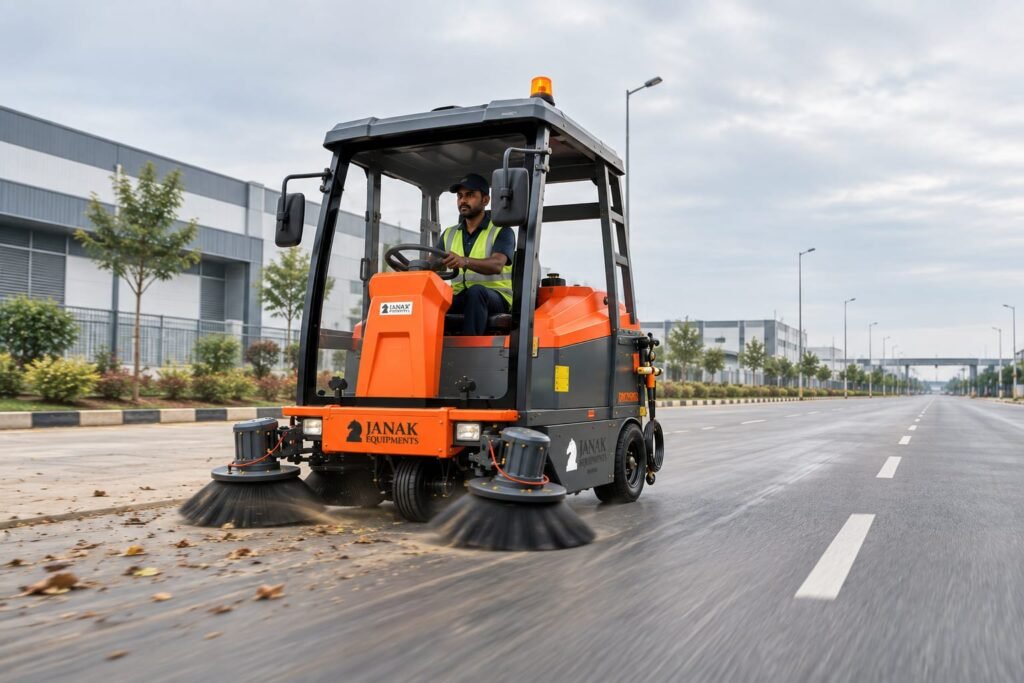
A ride-on sweeper isn’t a one-time purchase you forget about. It’s a piece of equipment your team will operate daily, often across multiple shifts, for years. The consequences of choosing the wrong size compound over time:
● Undersized machines mean more operating hours to cover the same area, higher labor cost per square meter cleaned, more battery cycles (accelerating wear), and frustrated operators trying to stretch a small machine across a big job.
● Oversized machines mean unnecessary upfront capital spent, higher charging and maintenance costs for capacity you’re not using, and — in facilities with tight corridors or frequent obstacles — a machine that’s genuinely harder to operate efficiently.
Getting the size right isn’t just about comfort. It directly affects your cost per square meter cleaned, which is the number that actually matters when you’re budgeting cleaning operations across a full year.
Start With One Question: How Much Ground Are You Covering?
Every other decision follows from this. Before looking at features, specifications, or price, get honest about the scale of the space you’re cleaning daily:
● A few thousand square meters of internal roads, walkways, or parking areas? You don’t need the largest machine on the lot.
● A sprawling industrial campus, port, or municipal ward with kilometers of road to cover? Undersizing here just means buying a second machine sooner than you’d like — or running your team ragged trying to make one small sweeper do a big machine’s job.
Once you know your coverage area, the next questions — debris load, turning radius needs, and daily runtime — start to narrow the choice further.
RK1100 — Best for Tight Spaces and Moderate Coverage
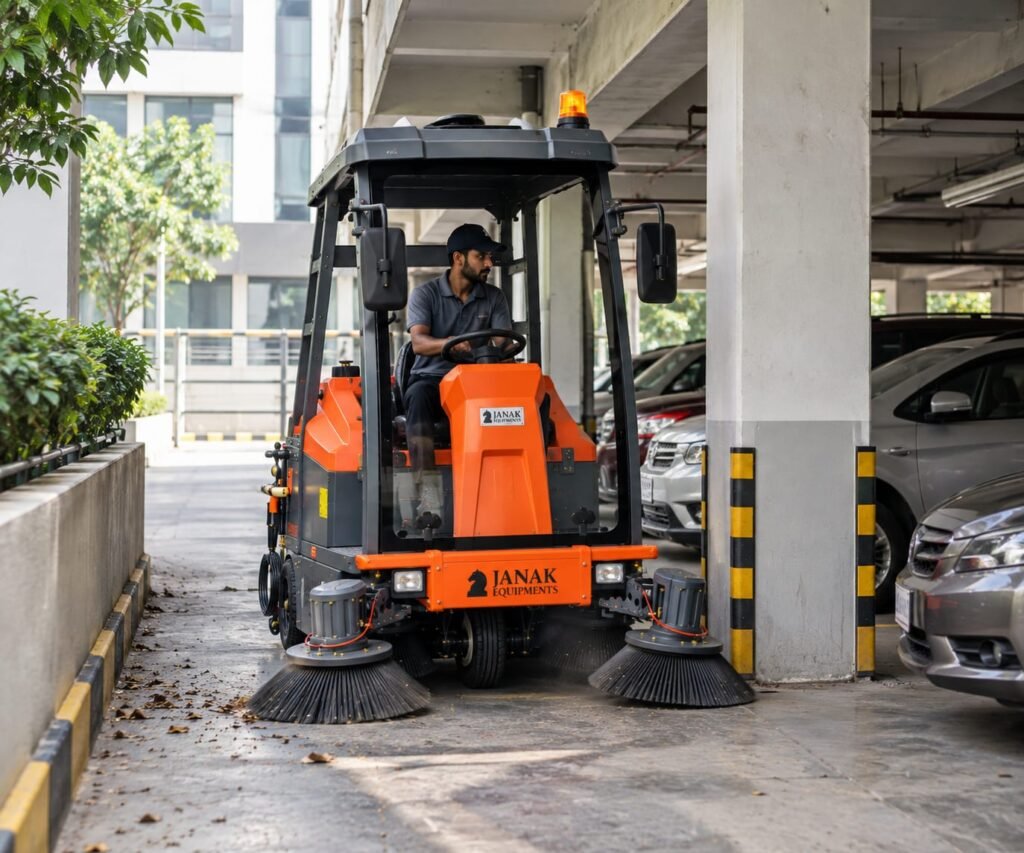
The RK1100 is built for facilities where maneuverability matters as much as coverage — think parking structures, smaller campuses, commercial complexes, and municipal wards with narrower lanes.
Good fit for:
● Educational campuses and schools
● Smaller commercial and residential complexes
● Municipal areas with tighter streets and frequent turns
● Facilities where storage space for the machine is limited
● Operations where the sweeper needs to navigate around parked vehicles, pillars, or tight corners regularly
If your biggest daily challenge is navigating around obstacles rather than covering vast open stretches, this is where you start. It’s also often the right entry point for facilities just transitioning from manual cleaning to mechanized sweeping, since it’s easier for new operators to get comfortable with.
RK1400 — The Balanced Mid-Range Option
The RK1400 steps up coverage without sacrificing much in maneuverability, making it the most versatile model in the range for operations that don’t fit neatly into “small” or “massive.”
Good fit for:
● Mid-sized industrial facilities
● Township internal roads and common areas
● Township internal roads and common areas
● Municipal corporations managing mixed-width roads
● Facilities that need one machine to handle both open stretches and tighter sections
If you’re unsure which model fits, the RK1400 is usually the safest middle-ground choice — enough coverage to handle serious ground, without the turning radius of the largest models. Many facility managers who are cleaning between 15,000 and 40,000 square meters daily find this model hits the right balance of speed and control.
RK1950 — Built for Larger, High-Demand Operations
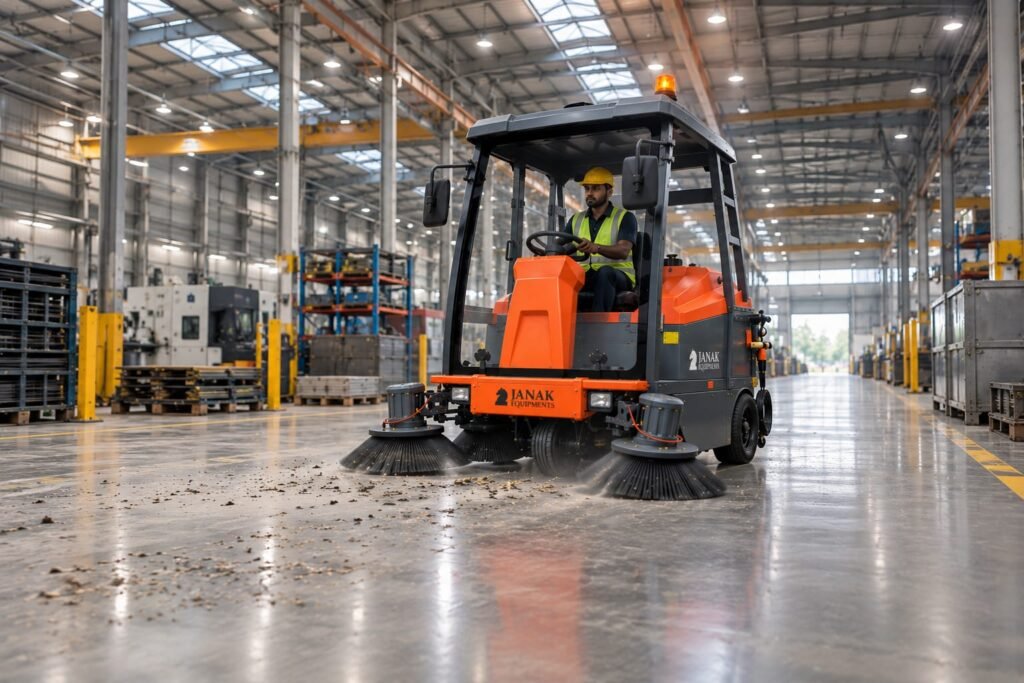
Once you’re managing larger factory floors, sizable municipal zones, or facilities with heavier daily debris loads, the RK1950 brings meaningfully more coverage and hopper capacity to the table — reducing how often the machine needs to stop and empty out.
Good fit for:
● Large industrial units and factories
● Municipal corporations with wide road networks
● Facilities generating higher volumes of daily debris (construction dust, industrial waste, seasonal leaf fall)
● Operations running multiple cleaning shifts back-to-back
The larger hopper capacity here isn’t just a convenience — it’s a real productivity factor. Every stop to empty a hopper is time not spent cleaning, and on a large site those minutes add up fast across a full shift.
RK2200 — Maximum Coverage for Large-Scale Operations
The RK2200 is the flagship of the range — built for operations where scale is the defining challenge. This is the model for facilities where every extra minute of coverage per charge translates directly into cost savings.
Good fit for:
● Airports and large transit hubs
● Ports and terminals
● Large industrial townships
● Municipal corporations covering extensive city zones
● Facilities running near-continuous multi-shift cleaning operations
If your operation spans a genuinely large area and downtime between cleaning cycles is a real operational concern, this is the model built to minimize it. It’s also the right choice if you’re currently running two smaller machines just to cover your daily ground — consolidating into one RK2200 can often reduce both capital and maintenance overhead.
A Quick Way to Decide
If you’re still weighing options after reading through the models above, ask yourself these three questions:
- How wide are my cleaning zones? Narrow lanes and tight turns favor the RK1100; wide open roads favor the RK1950 or RK2200.
- How much debris am I dealing with daily? Higher debris volume means you’ll want a larger hopper capacity, favoring the RK1950 or RK2200.
- How many hours a day does the machine need to run? Longer daily runtime requirements make battery capacity and coverage-per-charge a bigger priority — something our team can walk you through model by model.
If your answers point in different directions — for example, you have wide roads but also tight, debris-heavy zones — it may be worth discussing a mixed approach, or leaning toward the next size up rather than down, since undersizing tends to cost more in the long run than a slightly oversized machine.
Beyond Size: Other Factors Worth Considering
Charging infrastructure. Larger machines with bigger batteries take longer to charge and may need dedicated charging points if you’re running multiple shifts. Make sure your facility’s electrical setup can support the model you’re considering.
Operator training and comfort. Larger machines generally require slightly more operator experience to maneuver efficiently in tight spaces. If your team is new to ride-on equipment, starting with a more maneuverable model can ease the transition.
Terrain and surface type. Uneven surfaces, gradients, or mixed indoor-outdoor cleaning zones can affect which model performs best. This is exactly the kind of detail that’s worth discussing directly with our team before finalizing a purchase.
Future growth. If your facility is expanding — new wings, new zones, additional roads — it’s often worth sizing slightly ahead of your current needs rather than being back in the market for a second machine within a year or two.
Frequently Asked Questions
Can one machine handle both wide roads and tight corners?
To an extent, yes — the RK1400 in particular is designed for exactly this kind of mixed-use scenario. But if your tight zones are extensive and frequent, it’s often more efficient to use a smaller, more maneuverable machine for those areas and reserve a larger model for open stretches.
Is a bigger sweeper always better value?
Not necessarily. A bigger machine costs more upfront and consumes more charge per cycle. If your facility doesn’t need that coverage, you’re paying for capacity that sits idle. Right-sizing typically delivers better long-term value than defaulting to the largest option.
How do I know if I need the RK1950 or the RK2200?
This usually comes down to total coverage area and debris volume. If you’re managing a single large facility with moderate-tohigh debris, the RK1950 is often sufficient. If you’re covering genuinely vast zones — an entire airport terminal complex, a large port, or an extensive municipal ward — the RK2200’s maximum coverage and hopper capacity tend to justify the step up.
Don’t Guess — Talk to Someone Who Knows the Ground
Specs on a page only tell part of the story. The right model also depends on your terrain, your daily debris load, your charging infrastructure, and how your team plans to operate the machine day to day.
Our team has helped municipal corporations, factories, airports, and campuses across India match the right sweeper to their actual operating conditions — not just their budget on paper. Rather than guessing from a brochure, a short conversation with someone who has seen dozens of similar facilities can save you from an expensive sizing mistake.
Not sure which model fits your facility? Get in touch with our team to find the right ride-on sweeper for your operation, or explore our full range of ride-on sweepers built for Indian conditions.
Janak Equipments designs and delivers next-generation cleaning machines for municipal, industrial, and commercial operations across India. Learn more about us.