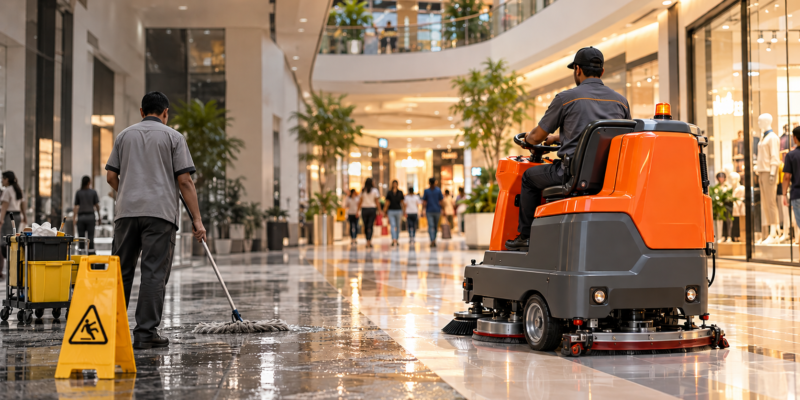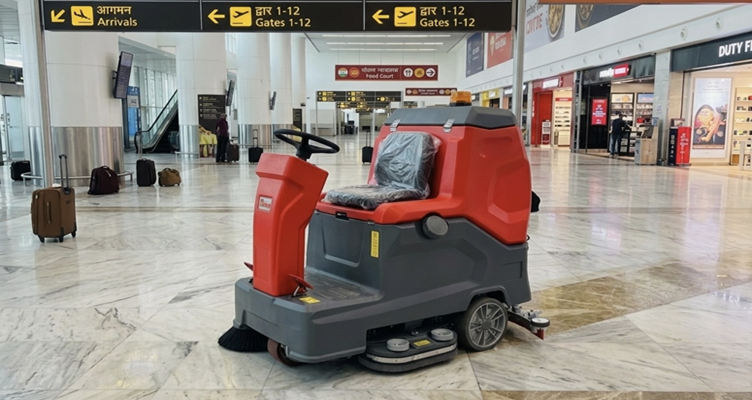
Walk through any major Indian airport or metro station during peak hours, and one thing becomes obvious fast: these spaces don’t stop. Thousands of people move through every hour, tracking in dust, debris, spills, and grime — and there’s no “closed for cleaning” sign to put up. Cleaning has to happen constantly, silently, and without slowing anyone down.
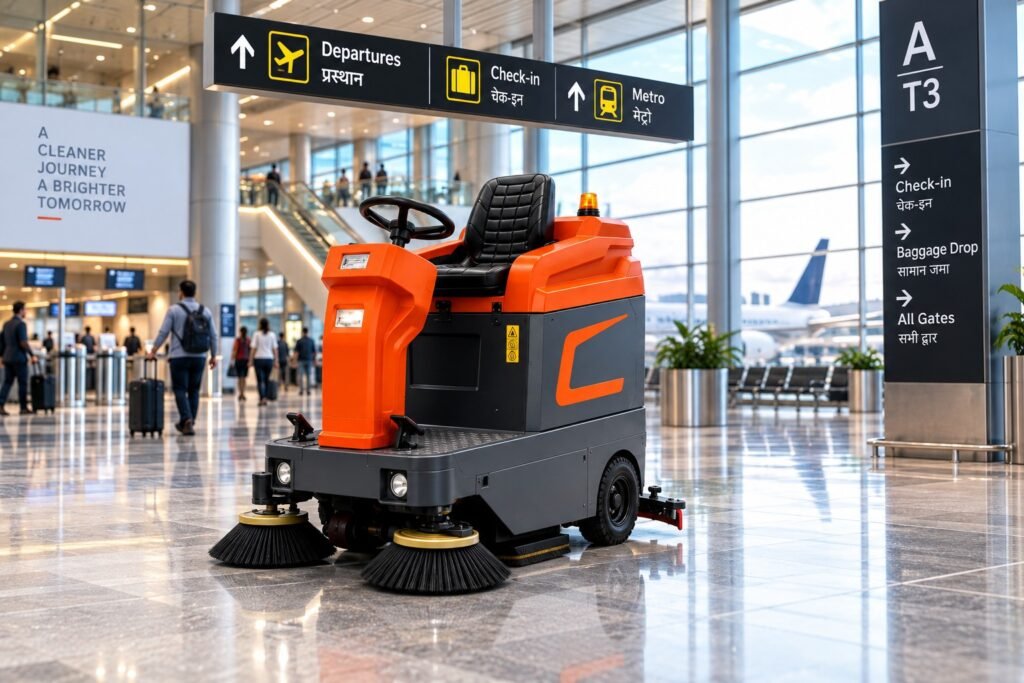
That’s exactly why traditional cleaning methods — brooms, mops, and small manual equipment — are quickly falling behind in transit infrastructure. And why ride-on sweepers are becoming the standard for airports, metro stations, and railway platforms across India.
The Scale Problem Manual Cleaning Can’t Solve
A single terminal concourse or metro platform can span thousands of square meters. Manual sweeping teams can take hours to cover that ground — and by the time they finish one end, the other end needs cleaning again.
Consider the numbers:
● A mid-sized airport terminal can see tens of thousands of passengers daily
● Metro stations in cities like Delhi, Mumbai, and Bengaluru handle lakhs of commuters across peak hours
● Dust, food wrappers, spilled liquids, and general debris accumulate continuously — not just at end of day
Manual teams simply cannot keep pace with this volume without significantly increasing headcount — which brings its own cost, scheduling, and consistency challenges.
Why Ride-On Sweepers Are the Better Fit
1.Speed That Matches the Space
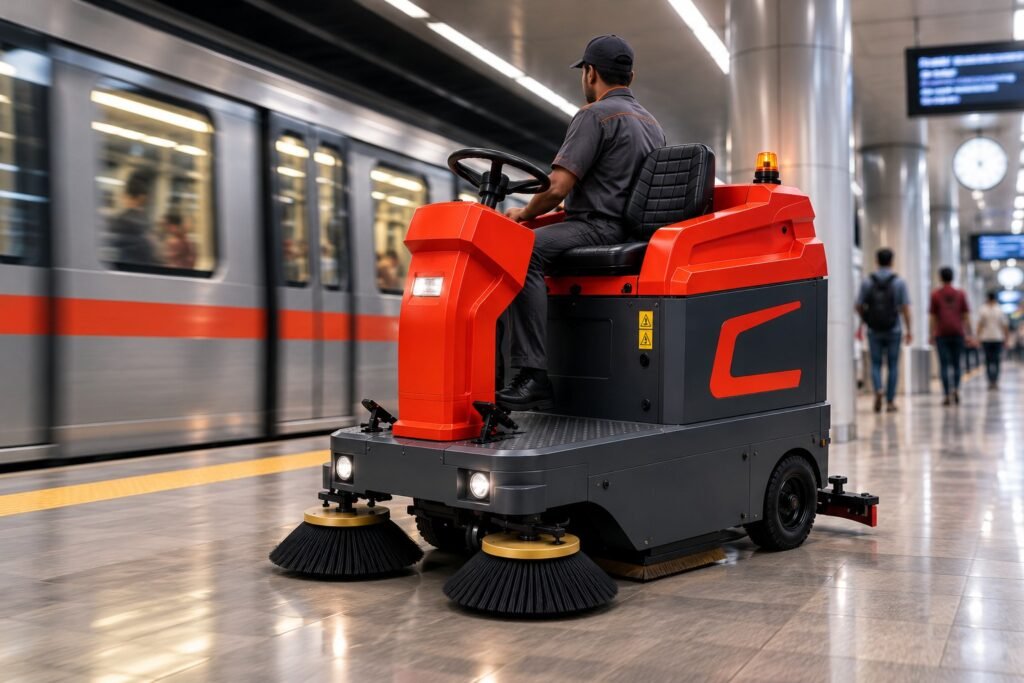
A ride-on sweeper can cover in minutes what would take a manual team hours. For a facility that never truly closes, that speed difference is the difference between a clean floor and a safety hazard.
2.Operates During Live Hours Without Disruption
Modern electric ride-on sweepers are quiet and compact enough to operate around passengers without shutting down sections of the terminal or platform. Cleaning happens around the crowd, not instead of it.
3.Consistent, Uniform Cleaning Standard
Manual cleaning quality varies — by fatigue, by shift, by individual attention to detail. A ride-on sweeper delivers the same brush pressure, same coverage pattern, and same result every single pass, which matters when you’re managing public perception and safety compliance simultaneously.
4.Dust Control That Actually Matters Indoors
Airports and metro stations are enclosed, high-footfall environments where dust doesn’t just look bad — it affects air quality and can trigger complaints or health concerns. Sweepers equipped with water spray or dust suppression systems trap particulate matter instead of scattering it into the air, unlike dry brooms.
5.Lower Long-Term Labor Cost
While the upfront investment in equipment is higher than hiring more manual staff, the operational math favors machines over time — one operator with a ride-on sweeper can do the work of several manual cleaners, reducing dependency on large cleaning crews across multiple shifts.
6.Built to Handle Continuous, Multi-Shift Use
Transit hubs run early morning to late night, sometimes 24/7. Equipment needs to be durable enough for that kind of continuous duty cycle — something manual tools and low-grade machines simply aren’t designed for.
What Airports and Metro Authorities Should Look For
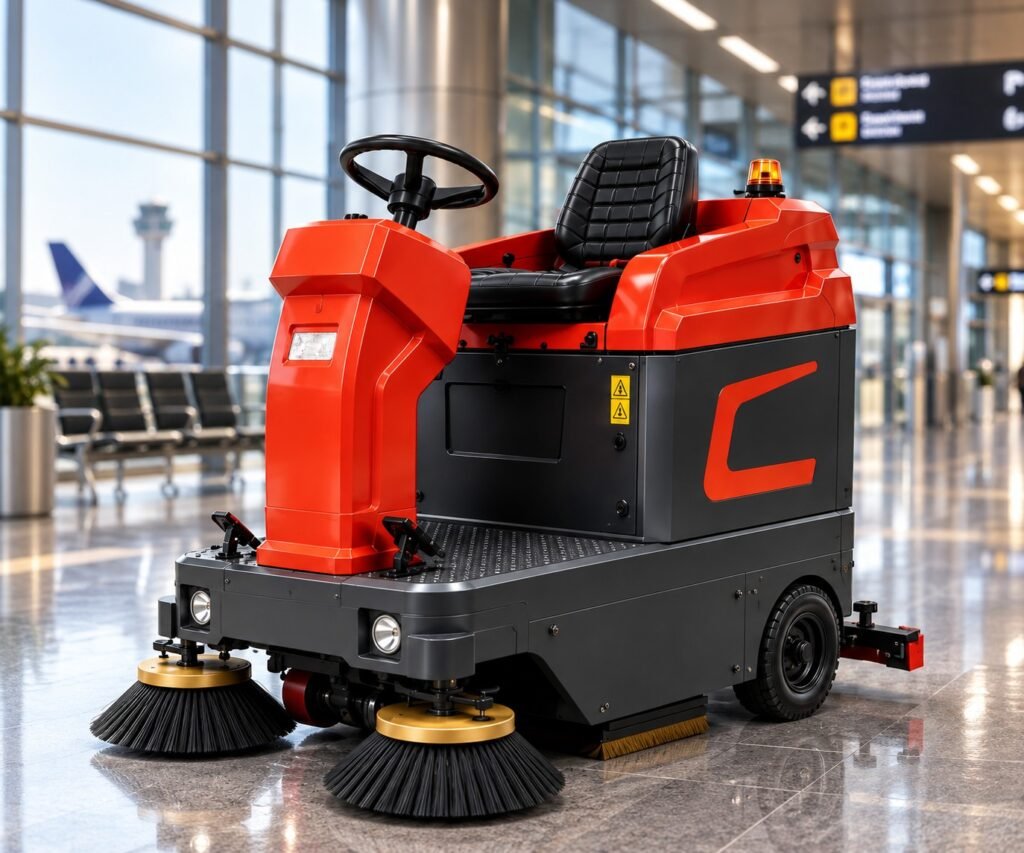
Not every ride-on sweeper is built for this environment. When evaluating equipment for airports, metro stations, or railway platforms, a few things matter most:
● Maneuverability — tight turning radius for navigating pillars, seating areas, and crowd zones
● Low noise operation — critical in enclosed public spaces
● Battery-powered, not diesel — no emissions or fumes in indoor/semi-enclosed environments
● Durable build — stainless steel construction that withstands constant use without corrosion or wear
● Easy maneuvering around obstacles — ticket counters, seating, signage, and moving crowds
Built for High-Footfall Indian Infrastructure
At Janak Equipments, our ride-on sweepers are engineered specifically with these demands in mind — 100% stainless steel bodies, advanced lithium-ion battery systems for extended runtime, and a compact turning design suited to the tight, high-traffic layouts common in Indian transit infrastructure.
Whether it’s a domestic airport terminal, a metro concourse, or a busy railway platform, the goal is the same: keep the space clean without ever getting in the way of the people moving through it.
eady to see the difference for yourself? Get in touch with our team to find the right ride-on sweeper for your operation, or explore our full range of ride-on sweepers built for Indian conditions.
Janak Equipments designs and delivers next-generation cleaning machines for municipal, industrial, and commercial operations across India. Learn more about us.